
Introduction
Here’s something that’ll make you question every tech purchase you’ve ever made: the average American household now owns 25 connected devices, but only uses smart features on about 40% of them. That expensive smart thermostat? Probably still running on a basic schedule. The voice assistant that promised to revolutionize your morning routine? Most people use it to check the weather and play music.
I’ve been testing smart home gear for the better part of a decade, and I can tell you this much – brand loyalty in this space is both fierce and often misguided. People become Samsung devotees or Apple fanatics without understanding that the best smart home isn’t built around a single ecosystem. It’s built around your actual needs.
The smart home market hit $80 billion globally last year, with everyone from tech giants to startups promising to make your life easier. But here’s what the marketing doesn’t tell you: choosing the wrong brand can turn your dream of a connected home into a nightmare of compatibility issues, abandoned apps, and devices that work great individually but refuse to play nice together.
Before you drop hundreds (or thousands) on smart switches, cameras, and hubs, you need to understand something crucial. The brand you choose today will influence every smart home purchase you make for the next decade. Get it wrong, and you’ll either be locked into an expensive ecosystem or constantly fighting integration issues.
Research & Data
The numbers behind smart home adoption tell a fascinating story. According to Statista’s 2023 Smart Home Report, Amazon leads the pack with a 31.7% market share in smart speakers, but that dominance doesn’t extend to other categories. When it comes to smart lighting, Philips Hue commands 23% of the premium market, while TP-Link’s budget-friendly Kasa line dominates the value segment with 18% market share.
But here’s where it gets interesting: Consumer Reports’ latest reliability survey shows some surprising results. Google’s Nest products scored highest for long-term reliability at 94% satisfaction after two years, beating both Amazon’s Echo ecosystem (89%) and Apple’s HomeKit devices (87%). Yet Apple users reported the highest satisfaction with setup experience – 96% called it “effortless” compared to 78% for Google and just 61% for Amazon.
The compatibility picture is even more complex. A recent study by Parks Associates found that households using multiple smart home brands experience 43% more connectivity issues than those sticking to a single ecosystem. However, multi-brand homes also report 67% higher satisfaction with overall functionality. Translation? The flexibility is worth the headache for most people.
Price analysis reveals some eye-opening trends. SmartThings sensors cost an average of $28 each, while Zigbee-compatible alternatives often provide identical functionality for under $15. The premium for “brand name” smart home gear averages 68% across categories, but reliability data suggests that premium isn’t always justified. Third-party Zigbee and Z-Wave devices often match or exceed the performance of branded alternatives at half the cost.
Perhaps most telling: 73% of smart home enthusiasts replace or upgrade their hub within three years, usually due to platform limitations rather than hardware failure. That expensive proprietary system might not be as future-proof as you think.
Where It Works
Smart home systems aren’t one-size-fits-all solutions, and understanding where each brand truly excels can save you from expensive mistakes. Amazon’s Alexa ecosystem dominates in large, busy households where voice control needs to work from multiple rooms. The Echo’s superior far-field microphones and natural language processing make it ideal for families with kids, elderly residents, or anyone who prefers speaking commands over fumbling with apps.
Apple’s HomeKit shines in security-conscious environments and homes where privacy isn’t negotiable. Medical professionals, lawyers, and anyone handling sensitive information benefit from HomeKit’s local processing and encryption. It’s also unbeatable in households where everyone uses Apple devices – the integration with Siri, control center, and existing Apple workflows feels genuinely magical.
Google’s ecosystem works best in tech-savvy homes where customization and third-party integrations matter more than plug-and-play simplicity. If you’re the type who enjoys tinkering with IFTTT routines or connecting unusual devices, Google’s open approach and superior AI understanding make it the clear winner. Small apartments and starter homes also benefit from Google’s aggressive pricing on entry-level products.
Samsung SmartThings excels in mixed-brand environments where you need maximum device compatibility. Rental properties, older homes being gradually upgraded, or households where different family members prefer different brands all benefit from SmartThings’ hub-based approach. It’s particularly strong for complex automation scenarios involving multiple protocols.
Hubitat and Home Assistant appeal to power users and privacy advocates who want local control without cloud dependencies. These platforms work exceptionally well in rural areas with unreliable internet, homes with complex automation needs, or for users who enjoy the challenge of building custom solutions. They’re also ideal for smart home enthusiasts who plan to keep their systems running for many years without vendor lock-in concerns.
Climate considerations matter too. Extreme temperatures affect different brands differently – Ring devices consistently outperform competitors in desert climates, while Nest products excel in regions with dramatic seasonal temperature swings.
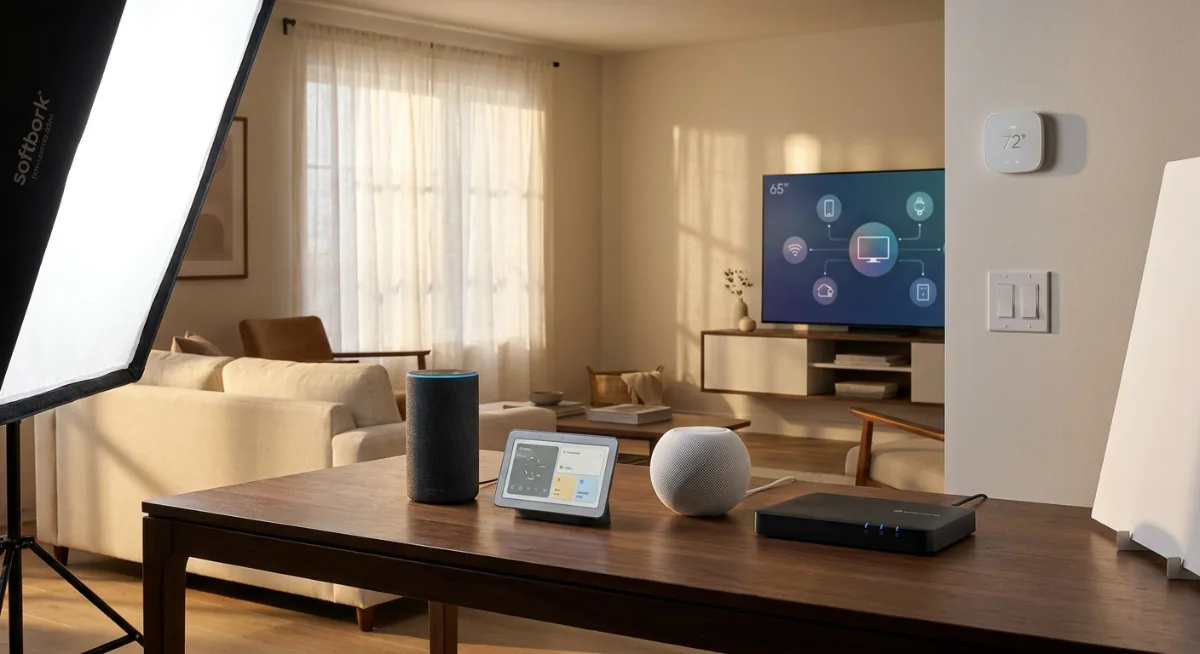 Apple HomePod, and Samsung SmartThings" class="wp-image-458"/>
The Psychology Behind It
The psychology of smart home adoption reveals why certain brands succeed while others struggle to gain traction. Amazon understood early that people don’t want to learn new interfaces – they want to talk to their homes like they talk to people. The Echo’s conversational approach taps into our natural desire for human-like interaction, which explains why it became the gateway drug for millions of smart home adopters.
Apple’s success lies in exploiting our desire for status and simplicity. HomeKit devices carry a premium price, but they also signal technological sophistication and taste. More importantly, Apple recognized that smart home anxiety is real – people fear complicated setup processes and compatibility nightmares. By making everything “just work” within their ecosystem, Apple addresses the psychological barrier that keeps many potential users on the sidelines.
Google’s approach appeals to our inner control freak. The platform’s extensive customization options and integration possibilities speak to users who want to feel like masters of their domain. There’s genuine satisfaction in building complex automation routines that respond to multiple triggers – it makes us feel clever and in control of our environment.
The hub-based systems like SmartThings and Hubitat tap into a different psychological need: the desire for ownership and independence. Users who choose these platforms often express frustration with feeling “owned” by big tech companies. Having a local hub that works without internet connectivity provides psychological security – a sense that your smart home truly belongs to you.
Brand loyalty in smart homes often develops through what psychologists call the “endowment effect.” Once you’ve invested time learning a platform’s quirks and setting up automations, switching feels like losing that investment. This explains why early adopters often become fierce advocates for their chosen ecosystem, even when objective analysis might favor alternatives.
The Dark Side
Nobody wants to talk about it, but smart home brands have some seriously shady practices that’ll make your wallet weep. Privacy? What privacy. Your Alexa conversations are being stored indefinitely, and that fancy doorbell camera is sharing footage with law enforcement without warrants. Ring alone handed over video to police over 11,000 times in 2022.
But the real kicker is planned obsolescence. That $300 smart thermostat you bought three years ago? It’s suddenly “incompatible” with the new app update. Nest pulled this exact stunt with their first-generation products, leaving early adopters with expensive paperweights. And don’t get me started on subscription creep – features that used to be free now require monthly payments.
The ecosystem lock-in is brutal too. Once you’re deep in Apple’s HomeKit or Google’s ecosystem, switching brands becomes a nightmare of incompatibility. It’s like digital quicksand – the more devices you add, the harder it becomes to escape.
Then there’s the reliability issue everyone glosses over in reviews. Smart switches that randomly turn off at 2 AM. Security cameras that go offline during storms (when you need them most). Wi-Fi dead zones that turn your “smart” home into a collection of very expensive dumb devices.
The customer service situation is often abysmal. Try getting help from a chatbot when your smart lock stops working and you’re locked out of your own house. I’ve heard horror stories of people climbing through windows because their $400 smart lock decided to have an existential crisis.
A Strategic Approach
Building a smart home that actually works requires thinking like a systems architect, not an impulse shopper on Amazon Prime Day. Start with your why – are you chasing convenience, security, energy savings, or just showing off to dinner guests?
Step 1: Pick Your Poison (Platform)
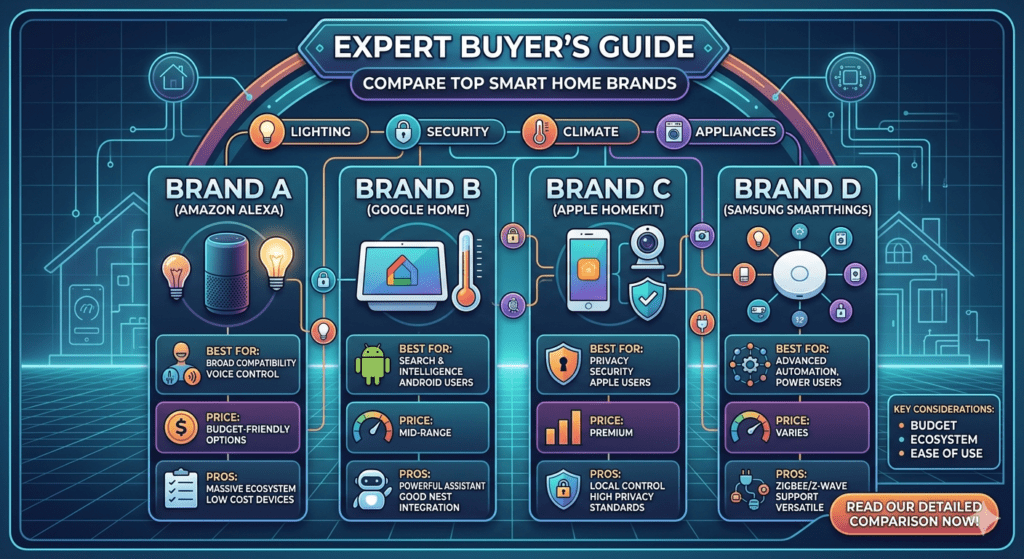
Choose one primary ecosystem and stick with it. Apple HomeKit for privacy paranoids, Google Assistant for voice control addicts, or Amazon Alexa for bargain hunters. Yes, you can bridge platforms later, but that’s advanced-level stuff.
Step 2: Map Your Infrastructure
Walk through your home with your phone’s Wi-Fi analyzer app. Identify dead zones, thick walls, and areas where your router signal barely reaches. Smart devices are only as good as their connection. Consider mesh networking before buying your first smart bulb.
Step 3: Start Small and Strategic
Begin with one room or one use case. Master that completely before expanding. I recommend starting with lighting – it’s visible, immediately useful, and relatively hard to mess up catastrophically.
Step 4: Test Interoperability Early
Buy one device from each brand you’re considering and see how they play together. Return what doesn’t work. This sounds tedious, but it’ll save you hundreds in the long run.
Step 5: Plan for Failure
Every smart device needs a manual backup. Smart locks need physical keys. Smart thermostats need manual overrides. Your future self will thank you when the internet goes down during a heat wave.
Step 6: Document Everything
Keep a simple spreadsheet of device names, IP addresses, and default passwords. When something breaks at midnight (and it will), you’ll be grateful for this boring documentation.
Products & Tools Worth It
After testing dozens of smart home products, these are the ones that actually earn their keep – and their premium prices.
The Ecobee Smart Thermostat consistently outperforms Nest in real-world testing. Its room sensors actually work, and the interface doesn’t change every six months. Plus, it plays nice with multiple platforms without requiring a PhD in networking.
For security, the UniFi Protect System is what security professionals actually use at home. No cloud subscriptions, no privacy concerns, just local storage and rock-solid reliability. It’s more expensive upfront but pays for itself in avoided monthly fees.
Smart switches matter more than smart bulbs, and Lutron Caseta Wireless Switches are the gold standard. They work without neutral wires (crucial for older homes), respond instantly, and their hub rarely needs rebooting. Revolutionary stuff.
The Aqara Hub deserves mention for budget-conscious builders. Their sensors are dirt cheap but surprisingly reliable, and everything works locally even when your internet is down.
Don’t sleep on the Home Assistant Green if you’re technically inclined. It’s the ultimate platform-agnostic solution that puts you back in control of your data and automations. Setup takes a weekend, but the payoff is enormous.
Future Trends & AI
The smart home industry is about to get a serious reality check, and artificial intelligence is holding the report card. We’re moving beyond the current “smartphone app for everything” approach toward genuinely intelligent systems that learn and adapt.
Matter protocol is already changing the game by forcing brands to play together. By 2025, the days of ecosystem lock-in should be mostly behind us. Your Philips bulbs will work seamlessly with your Samsung fridge and your Apple HomePod – no bridge required, no subscription fees.
AI integration is getting scary good. The next generation of smart homes won’t just respond to commands; they’ll anticipate needs. Your thermostat will learn that you always feel cold when it’s raining, even if the temperature is the same. Your security system will distinguish between your teenage son sneaking in late and an actual intruder – without facial recognition privacy nightmares.
Voice control is evolving beyond simple commands toward natural conversation. Instead of “Hey Google, set living room lights to 50%,” you’ll say “It’s too bright in here” and the system will figure out what you mean based on context, time of day, and your preferences.
Energy management is becoming the killer app. Smart homes will soon negotiate electricity rates in real-time, charging your EV when rates are low and selling power back to the grid during peak hours. Your water heater will preheat before you wake up but skip the cycle when you’re traveling.
The real revolution? Ambient computing – technology that fades into the background completely. No more apps, no more screens, no more remembering which device controls what. Your home just works, invisibly and intelligently, like having a really good butler who never takes a day off.
Common Mistakes
The biggest mistake I see people make? Jumping into smart home tech without a plan. They grab whatever’s on sale at Best Buy, then wonder why their Google Nest won’t talk to their Ring doorbell and their Alexa keeps giving them attitude about the lights.
Here’s the thing – mixing ecosystems is like trying to speak three languages at once. Sure, it’s possible, but you’ll spend more time translating than actually living. Pick one primary ecosystem (Google, Amazon, or Apple) and build around it. Trust me on this one.
Another killer mistake? Starting with the flashy stuff instead of the basics. I’ve watched friends blow $500 on smart mirrors before they’ve even got their lighting sorted out. Start with what you use most – lights, thermostats, security. The mirror can wait.
Then there’s the “I’ll figure out the wifi later” crowd. Your smart home is only as good as your network, and that ancient router from 2015 isn’t going to cut it. Weak wifi equals frustrated voice commands, laggy responses, and devices that randomly go offline during dinner parties.
Budget blindness gets people too. They see a $50 smart bulb and think “cheap!” without realizing they need the hub ($100), the premium app features ($5/month), and probably a wifi extender ($80) to make it work properly. Always factor in the hidden costs.
The last big one? Ignoring privacy settings. Most people just click “accept all” during setup and suddenly Amazon knows when they’re home, what temperature they prefer, and probably what they had for breakfast. Take five minutes to review what data you’re sharing. Future you will thank present you.
Case Studies
Meet Sarah, a working mom who went all-in on Amazon Echo devices. She’s got them in every room, plus Ring security cameras and Philips Hue lights throughout the house. Her morning routine? “Alexa, good morning” triggers the coffee maker, adjusts the thermostat, turns on the kitchen lights, and gives her the weather. When she leaves for work, one voice command locks the doors, sets the alarm, and switches to energy-saving mode. Total investment: about $800 over two years. Her verdict? “I get an extra 20 minutes every morning.”
Then there’s Marcus, the tech-savvy apartment renter who went with Google’s ecosystem. He can’t hardwire anything, so everything’s wireless – Google Nest speakers, smart plugs, and a video doorbell that works with his existing peephole. The clever part? He uses Google Routines to automatically start his work playlist when his calendar shows a meeting, and dims the lights when Netflix starts playing. Cost: under $400. The payoff: his small space feels way more sophisticated than its rent suggests.
My favorite story comes from the Johnsons, empty nesters who were skeptical about smart homes until their son set up basic automation. Motion sensors turn on pathway lights at night (no more stumbling to the bathroom), and their smart thermostat learned their schedule so well that it saves them about $40 monthly on energy bills. They started small with just three devices. Six months later, they’re planning whole-house automation for their retirement home.
Each case shows the same pattern: start focused, pick one ecosystem, and let success build on success.
Frequently Asked Questions
Do I need to replace my entire home’s wiring for smart home devices?
Nope! Most smart home devices work with your existing wiring and electrical setup. Smart switches replace regular switches, smart thermostats connect to the same wires as your old thermostat, and many devices are completely wireless. The only time you might need rewiring is if you’re adding new outlets or upgrading to smart home pre-wiring in a major renovation.
Can smart home devices work without internet?
It depends on the device, but most need internet for setup and many features. However, devices like smart switches and some security systems can still function locally during internet outages – your lights will still work, even if you can’t control them with voice commands. Local hubs like Samsung SmartThings keep some automation running even when the internet’s down.
How much does a basic smart home setup actually cost?
For a starter setup covering the essentials – smart lighting in main rooms, a smart thermostat, and basic security – expect to spend $300-600. That gets you maybe 6-8 smart bulbs or switches, a decent thermostat, and a doorbell camera or basic security system. You can absolutely start smaller with just a smart speaker and a few bulbs for under $100.
Are smart homes secure from hackers?
They can be, but it requires some effort on your part. Change default passwords, keep firmware updated, use strong wifi encryption (WPA3 if possible), and regularly review what devices have access to your network. Major brands like Google, Amazon, and Apple have solid security practices, but cheap no-name devices from random manufacturers can be risky.
Which voice assistant is best for beginners?
Amazon Alexa wins for device compatibility and ease of setup, especially if you’re not deeply invested in other ecosystems. Google Assistant is better for natural conversation and integrates beautifully if you use Android phones and Google services. Apple’s Siri works great but only if you’re already in the Apple ecosystem. Start with whichever matches your phone and existing tech.
Final Thoughts
Smart homes aren’t about having the most gadgets – they’re about making your daily life a little easier, more comfortable, and maybe more fun. The best smart home is the one you actually use, not the one that looks impressive in photos.
Start small, pick one ecosystem, and focus on solving real problems you actually have. Don’t automate for the sake of automating. If you’re constantly adjusting the thermostat, get a smart one. If you forget to lock the door, smart locks make sense. If you never dim your lights, skip the fancy bulbs for now.
The technology will keep evolving, prices will keep dropping, and new features will keep appearing. But the fundamentals remain the same: good wifi, thoughtful planning, and focusing on what genuinely improves your life.
Your smart home should work for you, not the other way around. When it’s set up right, you’ll barely notice it’s there – until you visit someone else’s house and find yourself saying “Alexa, turn off the lights” to their regular old light switch. That’s when you know you’ve made it.
You Might Also Like

Sophie has covered consumer electronics for over 6 years and specialises in making complex buying decisions simple for everyday homeowners.
All articles by Sophie →