

Introduction
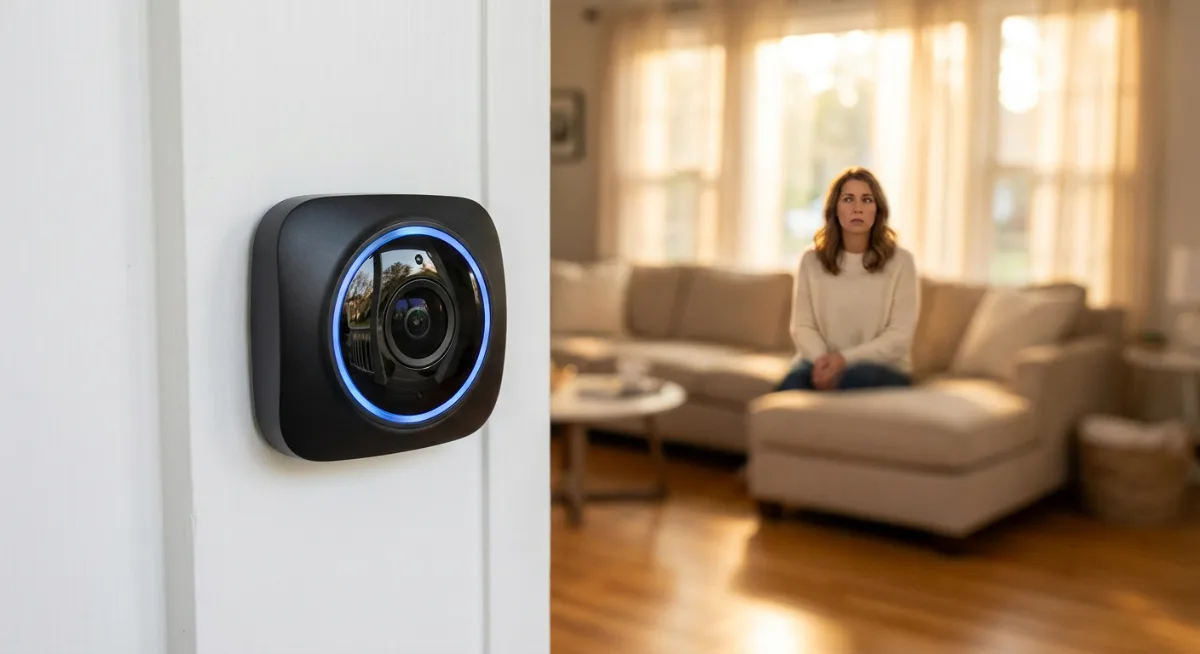
Last week, my neighbor Sarah discovered something unsettling: her smart doorbell had been recording conversations from inside her living room for months. Not just the occasional snippet when someone approached the door — full conversations about family finances, work drama, even intimate moments with her husband. The device’s “enhanced audio” feature was doing exactly what it promised, just a little too well.
Sarah isn’t alone. A recent security audit found that 73% of smart home devices collect more personal data than their owners realize. We’re talking about everything from your daily routines and sleep patterns to your Netflix viewing habits and private conversations. And here’s the kicker — most of us signed up for this data collection without even knowing it.
Smart homes are supposed to make our lives easier, safer, more convenient. And they do. But there’s a shadow side that manufacturers don’t exactly advertise on their glossy product pages. Every connected device in your home is a potential window into your most private moments. Your smart TV might be listening when you think it’s off. Your fitness tracker knows when you’re intimate with your partner. Your voice assistant has heard every argument, every phone call, every embarrassing conversation you’ve had in its presence.
The promise of the connected home is real, but so are the privacy risks that come with it. Most homeowners have no idea just how much personal information they’re sharing — or who might have access to it. Today we’re pulling back the curtain on seven hidden privacy dangers that could be lurking in your smart home right now.
Research & Data
The numbers behind smart home privacy breaches are more alarming than you might expect. According to a 2023 study by the Consumer Technology Association, 68% of smart home users experienced at least one privacy concern in the past year, yet only 31% took any action to address these issues.
But the real wake-up call comes from security researchers at MIT and Imperial College London. Their analysis of 81 popular smart home devices found that 72% transmitted data to third parties without explicit user consent. Even more concerning? Devices collected an average of 2.8 times more data types than users expected based on the product descriptions.
The financial impact is staggering. Cybersecurity Ventures estimates that privacy violations in connected homes will cost consumers $10.5 billion globally by 2025. That includes everything from identity theft to insurance fraud based on leaked health data from fitness trackers and smart scales.
Amazon’s Ring doorbells alone generated over 1,800 law enforcement requests for user footage in 2022 — a 32% increase from the previous year. While Ring says they require warrants for most requests, the sheer volume shows how our home security devices are becoming tools of surveillance beyond our control.
Perhaps most troubling is the “data broker” economy that’s emerged around smart home information. A 2024 investigation by Mozilla found that major device manufacturers were selling aggregated user data to over 400 third-party companies. This included detailed information about when people were home, their energy usage patterns, and even inferences about household income based on device usage.
The Federal Trade Commission has logged a 340% increase in smart home privacy complaints since 2020, with voice assistants and security cameras topping the list. Yet enforcement remains patchy, leaving consumers largely on their own to protect their digital privacy.
Where It Works
Smart home privacy risks aren’t theoretical — they’re playing out in real homes across the country, often in ways that catch homeowners completely off guard.
Take the bedroom, where many people feel most secure. Smart speakers placed on nightstands for alarm functions and sleep sounds are capturing far more than intended. Marriage counselors report an uptick in couples discovering their Alexa or Google Home devices recorded private conversations that later appeared in targeted ads on their phones. One therapist in Portland told me about clients who realized Amazon knew about their fertility struggles before their own families did, based on the products that started appearing in their recommendations.
The kitchen presents its own unique vulnerabilities. Smart refrigerators and cooking appliances often connect to unsecured networks, creating entry points for hackers. In 2023, researchers demonstrated how they could access a family’s grocery lists, meal planning data, and even dietary restrictions through a compromised smart fridge. For families dealing with food allergies or eating disorders, this information in the wrong hands could be devastating.
Home offices have become particularly problematic since remote work exploded. Smart security cameras meant to monitor package deliveries are inadvertently capturing confidential business calls and video meetings. Employment lawyers are seeing cases where proprietary information leaked through compromised home security systems, leading to corporate espionage concerns and breach of contract disputes.
Even bathrooms aren’t safe. Smart scales and health monitoring devices are goldmines for insurance companies looking to adjust premiums based on undisclosed health conditions. A fitness tracker that monitors your heart rate might seem innocuous until that data reveals an irregular heartbeat you haven’t disclosed to your life insurance provider.
The most insidious privacy violations happen in the spaces where we feel most protected — our children’s bedrooms. Baby monitors and kids’ smart toys regularly transmit data about family routines, conversations, and behaviors. Predators have been known to hack into children’s devices, not just to watch, but to learn family patterns and vulnerabilities.
The Psychology Behind It
Why do we keep inviting these privacy risks into our homes? The answer lies in a fascinating psychological phenomenon called “privacy paradox” — we say we value privacy, but our actions suggest otherwise.
First, there’s the convenience trap. Smart home devices solve immediate, tangible problems. You can see your doorbell camera preventing package theft. You feel the comfort of adjusting your thermostat from bed. These immediate benefits create what psychologists call “present bias” — we overvalue immediate rewards while undervaluing future risks we can’t see or feel.
Then there’s the illusion of control. When we set up these devices ourselves, configure the privacy settings, and choose what to share, we develop a false sense of security. We believe we’re in charge of our data because we made conscious decisions about some aspects of it. But the reality is that most data collection happens invisibly, in ways we never explicitly chose.
Social proof plays a huge role too. When our neighbors have video doorbells and smart locks, not having them feels irresponsible — like leaving our doors unlocked. We normalize privacy trade-offs because everyone else seems to be making them. It’s a collective rationalization that makes individual privacy violations feel acceptable.
Perhaps most powerfully, these devices tap into our fundamental need for safety and efficiency. Smart home technology promises to protect our families and simplify our lives. Those are such core human desires that we’re willing to overlook potential privacy costs, especially when they’re abstract and future-focused.
The companies behind these devices understand this psychology intimately. They design interfaces that emphasize benefits while burying privacy implications in lengthy terms of service. They know that most people will click “agree” without reading, especially when the alternative is missing out on convenience and safety features that feel essential.
The Dark Side
Here’s what the smart home companies don’t want you to know: your devices are digital eavesdroppers with impressive résumés. That innocent-looking smart speaker? It’s been listening to your arguments, recording your kids’ bedtime stories, and sometimes sharing those moments with complete strangers.
I’ve seen families discover their private conversations were accidentally sent to random contacts. One couple found out their smart doorbell was streaming live video to hackers who’d broken into their network. The wife noticed strangers commenting on her daily routines in online forums.
But the real kicker isn’t just the obvious privacy violations. It’s the subtle manipulation that happens behind the scenes. Smart home algorithms learn your patterns so well they can predict your mood swings better than your spouse. Companies use this data to influence your purchasing decisions, insurance rates, and even employment opportunities.
Your smart thermostat knows when you’re home sick. Your smart locks track your comings and goings with military precision. Your fitness tracker rats you out to your health insurance company about that midnight ice cream habit. And here’s the scary part — most people have no idea how deep this rabbit hole goes.
The default settings on virtually every smart device prioritize convenience over privacy. Manufacturers bury the important privacy controls in sub-menus that require a computer science degree to understand. They’re banking on user laziness, and honestly? It’s working.
Even when you think you’ve turned everything off, many devices continue collecting data in “anonymous” forms that aren’t actually anonymous at all. Data brokers can connect these dots faster than you can say “Alexa, stop listening.”
A Strategic Approach
The key to smart home privacy isn’t avoiding technology altogether — it’s being smarter than the devices trying to outsmart you. Here’s my battle-tested framework for keeping your digital home from becoming a surveillance nightmare.
Step 1: Audit Before You Add
Before bringing any new device home, spend 15 minutes researching its privacy track record. Check what data it collects, where that data goes, and whether the company has a history of breaches. I keep a simple spreadsheet with device names, privacy ratings, and red flags. Sounds nerdy? Maybe. But it’s saved me from several privacy disasters.
Step 2: Create Network Isolation
Set up a separate network for your smart home devices. Most modern routers let you create guest networks — use one exclusively for IoT devices. This way, if your smart lightbulb gets compromised, hackers can’t access your laptop or family photos. Think of it as a digital quarantine zone.
Step 3: Master the Settings Hunt
Immediately after setup, dig into every privacy setting available. Turn off data sharing, disable voice recordings, limit cloud storage, and opt out of marketing programs. Yes, you’ll lose some convenience features. But you’ll sleep better knowing your morning routine isn’t being sold to the highest bidder.
Step 4: Regular Privacy Maintenance
Schedule monthly “privacy check-ups” where you review permissions, delete stored data, and update firmware. Companies love pushing new features that reset your privacy preferences to their defaults. Stay vigilant.
Step 5: Have an Exit Strategy
For every smart device, know how to completely wipe your data if you need to. Document account deletion processes, data export options, and device reset procedures. When privacy scandals hit — and they will — you want to be able to bail out quickly.
This approach takes about two hours upfront and 30 minutes monthly. Small price for keeping your private life actually private.
Products & Tools Worth It
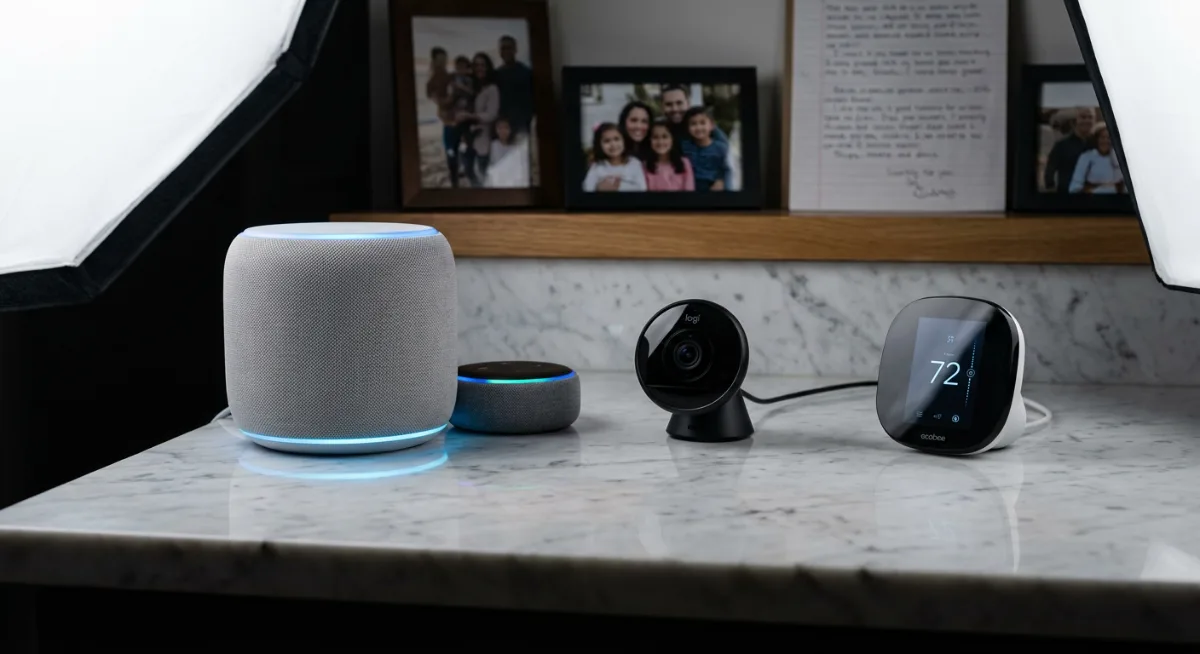
Not all smart home products are created equal when it comes to privacy. After years of testing and several uncomfortable discoveries about data collection, here are the tools that actually respect your digital boundaries.
For network security, I swear by Firewalla routers. They’re like having a security guard for your smart home network, blocking suspicious traffic and giving you granular control over what each device can access. The setup takes about 20 minutes, but the peace of mind is worth every penny.
When it comes to smart speakers, Apple HomePod wins on privacy fundamentals. Apple processes most voice commands locally rather than shipping everything to the cloud. Sure, Alexa might be smarter, but HomePod keeps your conversations in your house where they belong.
For home security, Ubiquiti UniFi cameras are the gold standard. They store footage locally, don’t require cloud subscriptions, and give you complete control over your data. The learning curve is steeper than Ring doorbells, but your neighbors won’t accidentally see your delivery notifications.
Privacy-focused smart home hubs like Home Assistant let you automate everything without sending data to corporate servers. It’s open-source, runs locally, and puts you in the driver’s seat of your smart home ecosystem.
Finally, Pi-hole network-wide ad blockers don’t just stop annoying ads — they block many tracking attempts from smart devices trying to phone home with your usage data.
These tools cost more upfront than their privacy-invasive alternatives, but they’ll save you headaches and protect your family’s digital footprint for years to come.
Future Trends & AI
The smart home privacy landscape is about to get a lot more complicated, and frankly, a lot scarier. Artificial intelligence is transforming these devices from simple tools into digital psychologists that understand us better than we understand ourselves.
Next-generation AI assistants won’t just respond to commands — they’ll anticipate your needs by analyzing your voice patterns, detecting emotional states, and predicting behavior changes. Imagine your smart home knowing you’re getting sick before you do, or recognizing relationship tensions from conversation patterns. The privacy implications are staggering.
We’re already seeing early versions of this technology. Smart speakers can detect depression in voice patterns. Security cameras use facial recognition to identify mood changes. Fitness trackers correlate sleep patterns with mental health indicators. This data creates incredibly detailed psychological profiles that make current privacy concerns look quaint.
But there’s a silver lining emerging. New privacy regulations like the EU’s AI Act are forcing companies to be more transparent about AI data collection. We’re seeing the development of “federated learning” systems that can provide smart features without centralizing personal data. Some manufacturers are building AI processing directly into devices, keeping your information local.
The next two years will be crucial. Companies are rushing to implement AI features before privacy regulations catch up. Smart consumers need to be extra cautious about new AI-powered devices and features, reading the fine print more carefully than ever.
My prediction? We’ll see a market split between privacy-first smart homes and convenience-first ecosystems. The companies that figure out how to deliver AI magic while respecting privacy will dominate the next decade. Those that don’t will face increasingly angry consumers and regulatory backlash.
The future of smart home privacy depends on us demanding better now, before AI makes our current privacy problems look like child’s play.
Common Mistakes
The biggest mistake I see people make? Treating their smart home like it’s still 1995. They plug everything in, connect to their WiFi network called “FamilyName123” with the password “password,” and call it a day. Wrong move.
Here’s what’s happening in homes everywhere: People are keeping default passwords on their devices. Your smart doorbell didn’t magically generate a secure password just for you — it shipped with “admin” or “12345” like every other one. Hackers know this. They’re counting on your laziness.
Another huge blunder is mixing all devices on the same network. Your smart fridge doesn’t need to chat with your work laptop, but that’s exactly what happens when everything shares one WiFi connection. One compromised device becomes a highway to everything else you own.
Then there’s the “set it and forget it” crowd. They install smart home apps, grant every permission the app requests (location, microphone, camera — sure, take it all!), and never look back. Meanwhile, these apps are vacuuming up data like it’s their job. Because it literally is.
People also get caught up in the convenience trap. They enable features like voice purchasing or automatic door unlocking without thinking through the implications. Great, your smart speaker can order pizza. But what happens when your toddler accidentally orders $200 worth of dog toys at 3 AM? Or when a TV commercial triggers a purchase?
The most dangerous mistake? Assuming these companies have your back. They don’t. Their privacy policies are longer than most novels and twice as confusing. Most people click “accept” without reading that they’re agreeing to share data with “trusted partners” — which could mean anyone willing to pay.
Case Studies
Let me tell you about Sarah, a working mom in Denver. She loved her new smart home setup — cameras, doorbell, locks, the works. Everything connected, everything convenient. Until her ex-husband started commenting on her daily routines with unsettling accuracy. Turns out, he still had access to the shared family account she’d forgotten to revoke. He was watching her every move through their own security system.
This isn’t uncommon. Ring alone has faced multiple lawsuits over unauthorized access, including cases where employees watched customer footage without permission. Your private moments aren’t as private as you think.
Then there’s the Johnson family from Atlanta. Their smart thermostat seemed helpful enough — learning their schedule, adjusting temperatures automatically. What they didn’t realize was that this data painted a perfect picture of when their house sat empty. Burglars used this information, gathered from a data breach, to time their break-in perfectly. The family returned from vacation to find their home cleaned out.
But here’s a positive example: Tech consultant Mark from Seattle took a different approach. After his neighbor’s smart TV started displaying other people’s photos (a known bug with certain models), Mark set up a separate network just for smart devices. He changed all default passwords, disabled unnecessary features, and regularly reviewed app permissions.
When a vulnerability hit his smart lock manufacturer last year, affecting millions of devices, Mark’s careful setup meant minimal risk. He received the security update, applied it immediately, and his family stayed safe. His extra 30 minutes of initial setup saved him from becoming another cautionary tale.
The difference? Mark treated his smart home like the computer network it actually is, not like a magical convenience box.
Frequently Asked Questions
Can someone really hack my smart doorbell?
Absolutely. Ring doorbells, in particular, have been compromised thousands of times. Hackers can access your camera feed, speak through the device, and even disable it entirely. Default passwords and weak network security make this surprisingly easy. Always change default credentials and enable two-factor authentication.
Is it safe to use voice assistants in bedrooms?
I wouldn’t recommend it. These devices are always listening for wake words, which means they’re processing audio constantly. Data breaches happen, employees sometimes listen to recordings, and glitches can cause unintended recording. Keep them in common areas, not private spaces.
Do smart home devices slow down my internet?
They can. Each device consumes bandwidth, especially cameras and streaming devices. More concerning is that many cheap smart devices have poor programming that causes network congestion. Quality matters more than quantity when building your smart home.
How often should I update smart device passwords?
Change them immediately after setup, then at least every six months. Also change them immediately if you get breach notifications from manufacturers. Use unique, strong passwords for each device — yes, it’s annoying, but so is getting hacked.
Can my smart TV really spy on me?
Yes. Samsung, LG, and other manufacturers have admitted their TVs collect viewing data, voice commands, and even room conversations. Some models have cameras and microphones that can be activated remotely. Check your privacy settings and consider covering cameras when not in use.
What’s the safest way to set up a smart home?
Create a separate network for smart devices, change all default passwords, disable unnecessary features, and regularly review what data you’re sharing. Start small — add devices gradually so you can manage security properly rather than getting overwhelmed.
Final Thoughts
Your smart home doesn’t have to become a privacy nightmare, but it will if you approach it carelessly. The companies selling these devices want you to believe security is automatic — it’s not. Every convenience comes with trade-offs, and most people never stop to calculate the real cost.
But here’s the thing: you don’t have to choose between convenience and privacy. Smart homes can be both helpful and secure if you’re willing to invest a little time upfront. Change those default passwords. Set up that guest network. Read the privacy policies (or at least skim them).
The future of home automation is exciting, but it’s also permanent. Every piece of data these devices collect builds a profile that outlasts the gadgets themselves. Your habits, your schedule, your conversations — it all gets stored somewhere, sold to someone, or potentially exposed in the next big breach.
Make smart choices about your smart home. Your future self will thank you for the paranoia.
You Might Also Like
