
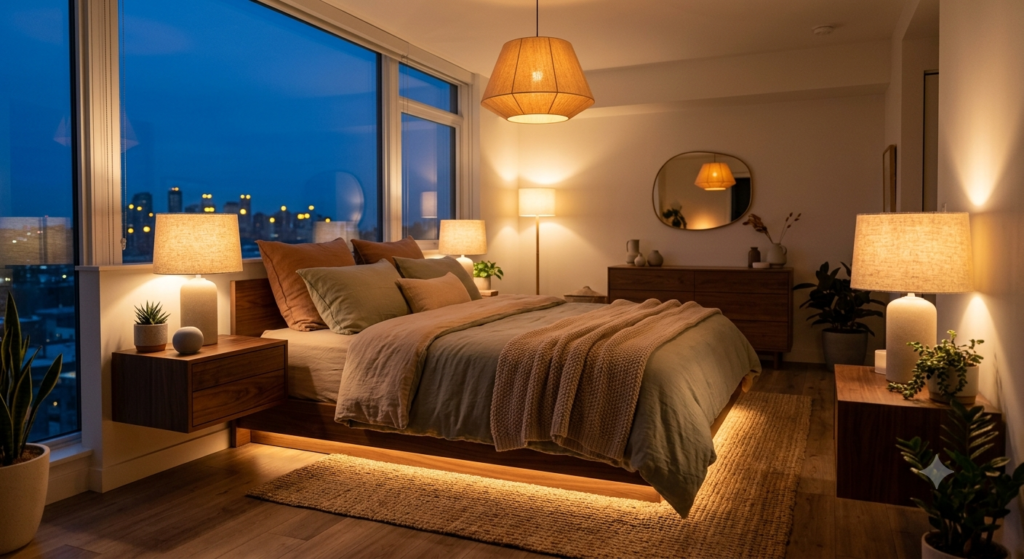
Quick Answer: The best smart bulb for the bedroom in 2026 is the Philips Hue White and Color for its sleep and wake features and reliability. For value, the Kasa KL135 delivers nearly the same experience at a third of the price. For the bedroom specifically, prioritise warm dimming (down to 2200K amber for sleep), gradual wake-up capability, and smooth low-end dimming. Two bulbs — one each side of the bed — is the ideal starting setup.
1. Why Bedroom Lighting Deserves Special Attention
The bedroom is the one room where lighting directly affects your health. The colour and brightness of light in the evening influences melatonin production and how easily you fall asleep. Light in the morning influences how alert and refreshed you feel on waking. Getting bedroom lighting right is not just about ambience — it genuinely affects sleep quality.
Smart bulbs are uniquely suited to the bedroom because they can shift colour temperature throughout the day automatically: cool and bright when you need to be alert, warm and dim as bedtime approaches, and a gentle sunrise simulation to wake you gently. A regular bulb cannot do any of this.
Also Read Smart Lights Without a Hub
2. What to Look for in a Bedroom Smart Bulb
- Warm dimming — the ability to go down to 2200K amber for evening wind-down, not just bright white.
- Smooth low-end dimming — quality bulbs dim smoothly to 1% without flickering, important for night-time.
- Gradual wake-up — the ability to brighten slowly over 15-30 minutes to simulate sunrise.
- Voice and schedule control — works with Alexa or Google for hands-free bedside control.
- Reliable reconnection — a bedroom bulb that drops offline and needs reconnecting is endlessly frustrating.
3. Best Overall Bedroom Smart Bulb
The Philips Hue White and Color Ambiance is the best overall bedroom bulb for its reliability, smooth dimming to 1%, excellent warm tones for sleep, and seamless gradual wake-up feature. It requires the Hue Bridge for full functionality, which adds cost but delivers the most reliable and responsive experience available.
Philips Hue White and Color Ambiance — best overall bedroom bulb — ~$45-50 per bulb
Why it wins: the dimming is the smoothest available, going down to a true 1% for night-time without the flicker or sudden cut-off that cheaper bulbs exhibit. For a room where you need gentle low light, this matters more than anywhere else in the home.
Also Read Do Smart bulb use Electricity when Off
4. Best Budget Bedroom Smart Bulb
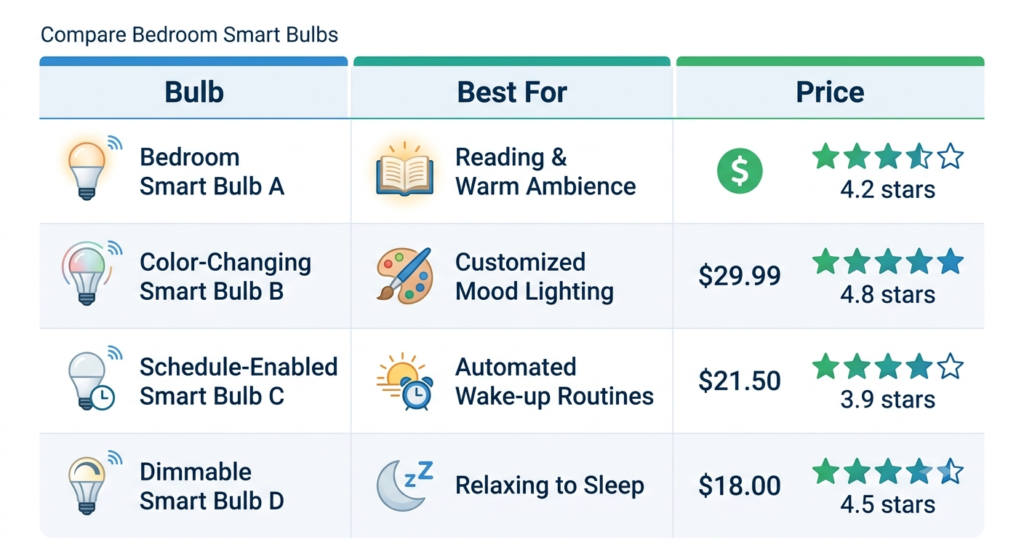
The Kasa KL135 delivers warm dimming, full colour, scheduling, and gradual wake-up at $14-16 per bulb — no hub required. For most people the experience is nearly indistinguishable from premium bulbs, making it the best value choice for the bedroom.
Kasa KL135 Smart Bulb — best budget bedroom bulb — ~$14-16 per bulb
The Kasa connects directly to Wi-Fi with no hub, dims well for evening use, and supports the scheduling and wake-up automations that matter most in a bedroom — all at a third of the premium price.
5. Best for Better Sleep
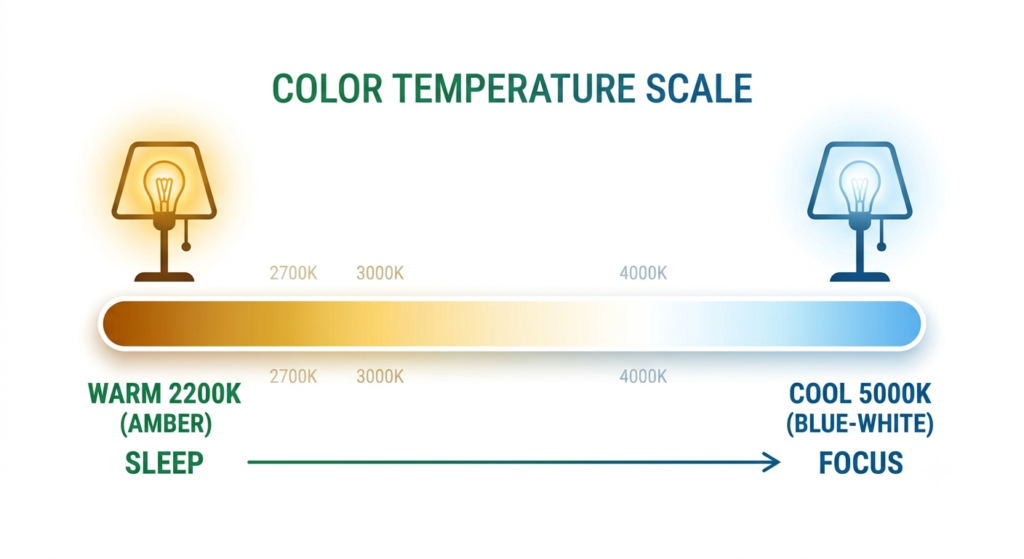
For sleep specifically, the key feature is how warm and dim the bulb can go in the evening. Bulbs that reach 2200K (deep amber) at very low brightness create the ideal pre-sleep environment by minimising the blue light that suppresses melatonin. Both Philips Hue and Kasa achieve this, with Hue offering slightly warmer minimum tones.
Pair the bulb with an automation that gradually shifts to warm amber in the evening and dims progressively as bedtime approaches — your body receives the natural signal to prepare for sleep.
6. Best for Gentle Wake-Ups
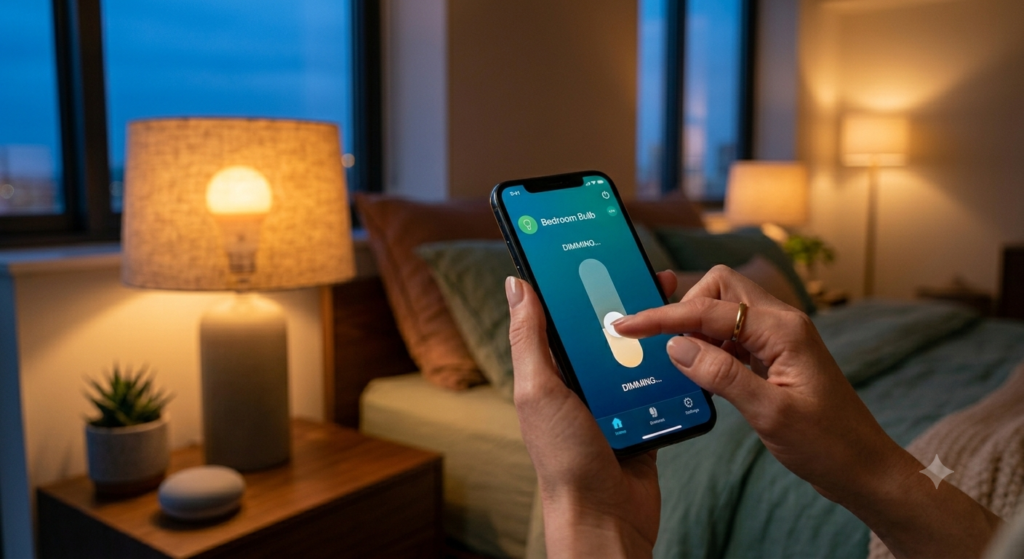
A sunrise-simulation wake-up is one of the most appreciated bedroom smart bulb features. The bulb brightens gradually from darkness to full light over 15-30 minutes before your alarm, waking you more naturally than a sudden sound. This is especially valuable in winter when natural sunrise is late.
Both Philips Hue and Kasa support this through their apps and through Alexa routines. Set the bulb to begin brightening 20 minutes before your alarm for the gentlest wake-up.
Amazon Echo Dot (5th Gen) — powers wake-up light routines — ~$35-50
7. The Right Colour Temperatures for the Bedroom
| Time of Day | Colour Temperature | Why |
| Morning wake-up | 4000-5000K cool | Promotes alertness and wakefulness |
| Daytime | 3500-4000K neutral | Comfortable general lighting |
| Evening wind-down | 2700K warm | Begins melatonin-friendly transition |
| Pre-sleep | 2200K deep amber | Minimises blue light, supports sleep |
| Night light | 2200K at 1-5% | Visible but non-disruptive for night trips |
The ideal bedroom setup automates these transitions so the lighting shifts naturally through the day without you adjusting anything manually.
8. Bedroom Lighting Automations Worth Setting Up
- Sunrise wake-up: bulb brightens gradually over 20 minutes before your alarm.
- Evening wind-down: lights shift to warm amber and dim progressively after 8pm.
- Reading mode: a voice command sets a comfortable warm reading brightness.
- Sleep timer: lights dim to off over 30 minutes after you say goodnight.
- Night light: motion-activated dim amber light for night-time trips, bright enough to see without fully waking.
Kasa KL135 Smart Bulbs 4-Pack — enough for bedroom automations — ~$55-65 for 4
9. How Many Bulbs You Need
For most bedrooms, two smart bulbs — one in each bedside lamp — is the ideal starting point. This gives you independent control on each side of the bed, which matters when one person wants to read while the other sleeps. Add a third bulb in the main ceiling fixture for full-room control if your ceiling light takes a standard bulb.
A 4-pack covers two bedside lamps plus a ceiling fixture with one spare, and works out cheaper per bulb than buying singles.
10. Frequently Asked Questions
Do smart bulbs help you sleep better?
Yes — smart bulbs that shift to warm amber tones (2200-2700K) and dim in the evening reduce blue light exposure, which supports natural melatonin production and easier sleep onset. The gradual wake-up feature also helps you wake more naturally. The effect is meaningful for sleep quality when used consistently.
Can smart bulbs wake me up gently in the morning?
Yes — this is one of their best bedroom features. Smart bulbs can brighten gradually from darkness to full light over 15-30 minutes before your alarm, simulating a sunrise. This wakes you more gently than sound alone and is especially valuable in dark winter mornings.
Do I need a hub for bedroom smart bulbs?
It depends on the brand. Philips Hue requires the Hue Bridge hub for full functionality. Kasa, Wyze, and many other Wi-Fi bulbs connect directly to your router with no hub needed. For a simple bedroom setup, hub-free Wi-Fi bulbs like Kasa are the easiest starting point.
Will the bulb keep my schedule if the Wi-Fi drops?
Many smart bulbs store their schedules on the device, so basic schedules continue even during brief Wi-Fi interruptions. Voice control and app control require connectivity, but a pre-set wake-up or wind-down schedule stored on the bulb will typically still run.
Are smart bulbs bright enough for a bedroom?
Yes — a standard smart bulb outputs 800-1100 lumens at full brightness, equivalent to a 60-75W traditional bulb. This is more than adequate for bedroom lighting. The advantage is that they also dim smoothly to very low levels for evening and night-time use.
Can two people control the same bedroom bulbs?
Yes — both partners can control the bulbs through the app on their own phones, through voice commands to a shared smart speaker, or through individual bedside controls. You can also set up independent control for each bedside lamp so one person can read while the other sleeps.
The Bottom Line
The bedroom is the room where smart lighting delivers the most genuine benefit — not just convenience, but better sleep and gentler mornings. The Philips Hue White and Color is the best overall choice for its smooth dimming and reliability, while the Kasa KL135 delivers nearly the same bedroom experience at a third of the price for budget-conscious buyers.
Start with two bulbs — one each side of the bed — and set up the two automations that matter most: a gradual sunrise wake-up and an evening warm-dim wind-down. These two alone transform how you fall asleep and how you wake, and they are the strongest argument for smart lighting in the bedroom.
Internal Links to Add: Link smart lighting without hub article in section 3. Link do smart bulbs use electricity article in section 9. Link best Alexa routines article in section 8. Link smart home beginners guide in section 1. Link smart light strips article in FAQ. End: Read next: Do Smart Bulbs Use Electricity When Off? 2026.
You Might Also Like

Daniel is a certified electrician turned tech writer focused on smart lighting, energy monitoring, and helping homeowners reduce electricity bills with smart tech.
All articles by Daniel →