
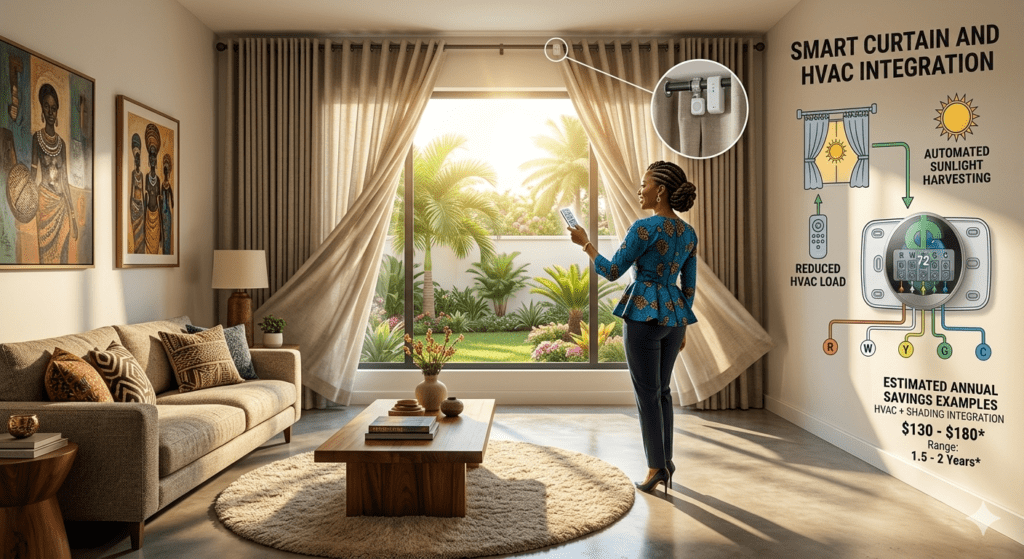
Quick Answer: How Much Money Can a Smart Thermostat Save?
Smart thermostats typically reduce heating and cooling costs by 10–15% per year.
| Climate Type | Average HVAC Bill | Monthly Savings | Estimated Annual Savings |
|---|---|---|---|
| Hot climates (Arizona, Texas) | $180/month | $25–45 | $300–540 |
| Cold climates (Minnesota, Wisconsin) | $160/month | $22–35 | $260–430 |
| Mild climates (California, Florida) | $85/month | $10–18 | $130–220 |
| Mixed climates (Illinois, Ohio) | $130/month | $17–30 | $200–340 |
Simple formula to estimate your savings
Monthly HVAC bill × 0.13 × 12 = Estimated yearly savings
Example:
$150 monthly heating/cooling × 0.13 = $19.50
$19.50 × 12 = $234 saved per year
Many households save $300–$500 annually with proper thermostat automation.
7 Ways Smart Thermostats Save You Money
Smart thermostats reduce energy waste by automating temperature adjustments based on your schedule, location, and home conditions.
Below are the most common ways homeowners save money.
1. Automatic Scheduling
Average savings: $40–$80 per month
Traditional thermostats require manual adjustments, which most people forget to do.
Smart thermostats automatically create schedules based on your daily routine.
Example schedule:
| Time | Temperature |
|---|---|
| 6am–8am | 72°F (morning routine) |
| 8am–6pm | 62°F (away at work) |
| 6pm–10pm | 72°F (evening comfort) |
| 10pm–6am | 66°F (sleeping) |
Lowering the temperature while away reduces heating or cooling demand significantly.
Example savings:
| Scenario | Monthly Heating Cost |
|---|---|
| Manual thermostat | $140 |
| Smart scheduled thermostat | $95 |
| Monthly savings | $45 |
Annual savings:
$45 × 12 = $540 per year
2. Geofencing (Location-Based Temperature Control)
Average savings: $35–$75 per month
Geofencing uses your smartphone location to automatically adjust your thermostat when you leave or return home.
Example workflow:
- You leave home
- Thermostat switches to energy-saving mode
- Temperature returns to comfort level before you arrive
Example (Phoenix summer AC):
| Scenario | Monthly Cooling Bill |
|---|---|
| Manual thermostat | $250 |
| Geofencing smart thermostat | $190 |
Savings:
$60 per month = $720 per year
Geofencing works because the system only maintains comfortable temperatures when someone is home.
3. Night Temperature Setback
Average savings: $20–$40 per month
Lowering heating temperatures overnight reduces energy usage significantly.
Sleep research also shows cooler temperatures improve sleep quality.
Recommended night settings:
| Season | Temperature |
|---|---|
| Winter | 65°F–68°F |
| Summer | 74°F–76°F |
Example winter savings:
| Scenario | Monthly Heating Cost |
|---|---|
| Constant 72°F | $180 |
| Night setback schedule | $150 |
Savings:
$30 per month = $360 per year
Research from energy efficiency studies shows:
Each 1°F setback saves approximately 1–3% of heating energy.
4. Humidity Optimization
Average savings: $15–$30 per month
Humidity greatly impacts HVAC efficiency.
When humidity levels are high, air conditioners must work harder.
Recommended humidity levels:
| Season | Ideal Humidity |
|---|---|
| Winter | 30–40% |
| Summer | 50–60% |
Example savings in humid climates:
| Scenario | Monthly AC Cost |
|---|---|
| No humidity control | $240 |
| Smart humidity optimization | $220 |
Savings:
$20 per month = $240 per year
5. Smart Home Automation
Average savings: $25–$50 per month
Smart thermostats integrate with:
- motion sensors
- smart lights
- window sensors
- door sensors
Example automation:
Open window detection
When a window opens, the thermostat pauses heating or cooling temporarily to prevent energy waste.
Motion sensor integration
Unused rooms automatically receive less heating or cooling.
This can reduce energy usage by 15–20%.
6. Time-of-Use Energy Pricing Optimization
Average savings: $20–$40 per month
Some utilities charge different electricity rates based on time of day.
Example electricity pricing:
| Time | Price |
|---|---|
| Peak (4pm–9pm) | $0.40 per kWh |
| Off-peak (9pm–4pm) | $0.15 per kWh |
Smart thermostats can automatically adjust cooling schedules to use cheaper electricity.
Example savings:
| Scenario | Monthly Cost |
|---|---|
| Standard usage | $120 |
| Time-of-use optimized | $85 |
Savings:
$35 per month = $420 per year
7. Energy Reports and Behavioral Changes
Average savings: $15–$30 per month
Smart thermostats generate weekly energy reports showing:
- energy usage trends
- comparisons with similar homes
- recommendations to reduce energy consumption
Example report insight:
Lowering your thermostat from 72°F to 71°F could save $30 per month.
Small adjustments like this add significant long-term savings.
Studies show that energy feedback reports reduce consumption by 5–10%.
Real Case Studies: Smart Thermostat Savings
Case Study 1: Houston Home (High AC Use)
Home size: 2,500 sq ft
Thermostat: Amazon Smart Thermostat
| Month | Before | After |
|---|---|---|
| June | $240 | $185 |
| July | $240 | $180 |
| August | $240 | $185 |
| September | $240 | $210 |
Total summer savings: $200
Projected annual savings:
$600 per year
Case Study 2: Minnesota Winter Heating
Home size: 1,800 sq ft
Thermostat: ecobee Smart Thermostat
| Month | Before | After |
|---|---|---|
| November | $140 | $115 |
| December | $200 | $165 |
| January | $200 | $160 |
| February | $180 | $145 |
Total winter savings: $135
Estimated yearly savings:
$400+ per year
Smart Thermostat Return on Investment
Budget Thermostat Example
Average price: $79
| Month | Total Savings |
|---|---|
| Month 1 | $35 |
| Month 2 | $70 |
| Month 3 | $105 |
Break-even point:
2–3 months
Mid-Range Thermostat Example
Average price: $129
Break-even point:
3–4 months
Premium Thermostat Example
Average price: $249
Break-even point:
6–8 months
How to Maximize Your Smart Thermostat Savings
Use these settings to get the highest energy savings.
Winter Schedule
| Time | Temperature |
|---|---|
| Away (daytime) | 62°F |
| Evening | 72°F |
| Sleeping | 66°F |
Summer Schedule
| Time | Temperature |
|---|---|
| Away (daytime) | 78°F |
| Evening | 72°F |
| Sleeping | 76°F |
Additional Energy Saving Tips
You can increase savings further by improving overall home efficiency.
| Upgrade | Cost | Monthly Savings |
|---|---|---|
| Seal air leaks | $50–100 | $30–50 |
| Ceiling fans | $40–100 | $15–25 |
| Water heater insulation | $30–50 | $10–15 |
| Clean HVAC filters | $15 | $5–10 |
Combining these with smart thermostat automation can reduce energy costs by 20–30%.
How to Calculate Your Personal Savings
Follow this quick worksheet.
Step 1 — Find your monthly HVAC bill
Example: $140 per month
Step 2 — Calculate yearly cost
$140 × 12 = $1,680
Step 3 — Estimate savings
| Savings Rate | Yearly Savings |
|---|---|
| 10% | $168 |
| 13% | $218 |
| 15% | $252 |
Homes with high heating or cooling usage can exceed $500 yearly savings.
Frequently Asked Questions
Do smart thermostats really save money?
Yes. Studies show smart thermostats reduce energy usage by 10–15% on average.
Savings depend on:
- climate
- HVAC efficiency
- thermostat settings
- home insulation
How long does it take to see savings?
Most households notice reduced energy bills within 1–2 months.
Full optimization typically occurs after 3 months of usage.
Can smart thermostats work without Wi-Fi?
Yes. They still control heating and cooling locally, but remote control and automation features require Wi-Fi.
What is the biggest money-saving feature?
Geofencing and automated scheduling produce the largest savings.
These features prevent heating or cooling empty homes.
Final Verdict: Can You Really Save $500 Per Year?
Yes — especially in homes with high heating or cooling costs.
Typical savings range:
| Climate | Annual Savings |
|---|---|
| Mild climate | $100–$250 |
| Mixed climate | $200–$400 |
| Extreme climates | $400–$600 |
For many households, a smart thermostat pays for itself within 3–6 months.
Next Steps
If you want to start saving money on energy bills:
- Check your current heating and cooling costs
- Choose a compatible smart thermostat
- Install it (usually takes 20–30 minutes)
- Enable geofencing and scheduling
- Monitor your energy reports
Once optimized, most homes reduce HVAC costs by $300–$500 per year.
You Might Also Like

Marcus spent 8 years as a residential technology consultant before founding Smart Home Advisor Hub in 2024. He has personally tested over 200 smart home devices.
All articles by Marcus →